



What is Steel Channel and how is it used?
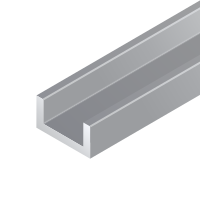
Steel Channel is a shape of steel section that has 2 parallel flanges and an adjacent web set in a c or u shape. They have many uses and are typically used throughout the constructional steel and general engineering industries. The proper term for this section is Parallel Flange Channel ‘PFC’.
Typical applications include anything from a small frame to structural steel applications.

Understanding the dimensions
Important dimensions are the width of each face / flange and KG per Meter (KG/M). Changes in the KG/M will have a direct effect on the thickness of both flanges and overall strength of the section. The higher the KG/M the thicker the flanges will be and thus the strength.
All our steel channels are listed as: Height x Width x Thickness.
The other important factor for strength is the material grade. The higher the numerical grade the stronger gram for gram the material will be. All structural steel applications should have the correct grade, section size and weight calculated and specified by a structural engineer.
Common grades for PFC are typically between S275 and S355. The ‘S’ in the grade means that it is Structural Steel, and the number is the minimum yield strength for example S355 has a minimum yield strength of 355Mpa (N/mm²), there are other important properties too, we have detailed this information in our technical knowledge base section here.
Galvanised steel channel for life long protection
Like all mild steel, channels will need to be protected from the atmosphere. Steel oxidises due to the presence of oxygen in the air and sources of moisture. As a result, in most situations they require protective treatment, most commonly this will be zinc phosphate primer, multi coat paint systems or hot dip galvanising. Other coating systems include intumescent paint to provide the steel section with fire protection for specific time periods.